Whoa! My first glance at a Solana block used to feel like staring at static. Medium-sized blocks of hex and addresses. At first it was messy and cryptic. Then I learned to read the pulse of the chain and things started to click in a way that felt almost human — somethin’ like reading financial breath.
Seriously? The truth is the explorer is way more than a pretty block viewer. It surfaces decoded instructions, token mints, holder distributions, and logs that tell the backstory of a transaction. Most people look up a signature and stop there. But you can dig into pre/post balances, inner instructions, and program logs to see exactly what ran and why. That depth is what separates casual clicks from meaningful on-chain investigation.
Here’s the thing. If you only glance at a transaction hash you miss context. Medium-level searches are fine for quick checks. Longer queries reveal patterns over time, though — like repeated failed attempts, or gas quirks tied to a program update. I remember one morning when a bot was spamming a marketplace; my instinct said something was off, and the logs confirmed the bot was hitting an outdated program id repeatedly.
Wow! Use the token tracker. It’s not just a list of balances. The token page shows total supply, decimals, recent transfers, and a holders snapshot that helps you spot whales and liquidity concentration. You can often infer whether a token is healthy or extremely concentrated by scanning the top 10 holders and watching movement over days. That mental model saves time when assessing rug risk or potential wash trading.
Hmm… watch the mint address. Medium signals show mint authority and freeze authority. Long observations — for example, whether the mint authority gets revoked after launch — tell you if the project planned decentralization or not. Initially I thought mint pages were just data, but then realized they narrate governance choices and risk vectors in plain sight.
Okay, so check this out—signature search is your first stop for dispute resolution. A signature reveals status (confirmed/finalized), slot, timestamp, fee paid, and the transaction’s inner instructions. If you’re investigating a failed swap you can read the program logs to see which instruction threw the error. Actually, wait—let me rephrase that: reading the logs often shows the exact reason a program rejected an instruction, which is priceless when troubleshooting or writing a support ticket.
Here’s what bugs me about shallow checks. People see “Success” and assume nothing else matters. Medium diligence involves checking pre/post balances for every involved account. Longer checks involve tracing back to the originating instruction and verifying token mints — because sometimes a “successful” transfer simply moved deprecated wrapped tokens. I’m biased toward deep dives; it feels safer, and yes, it’s slower but worth it.
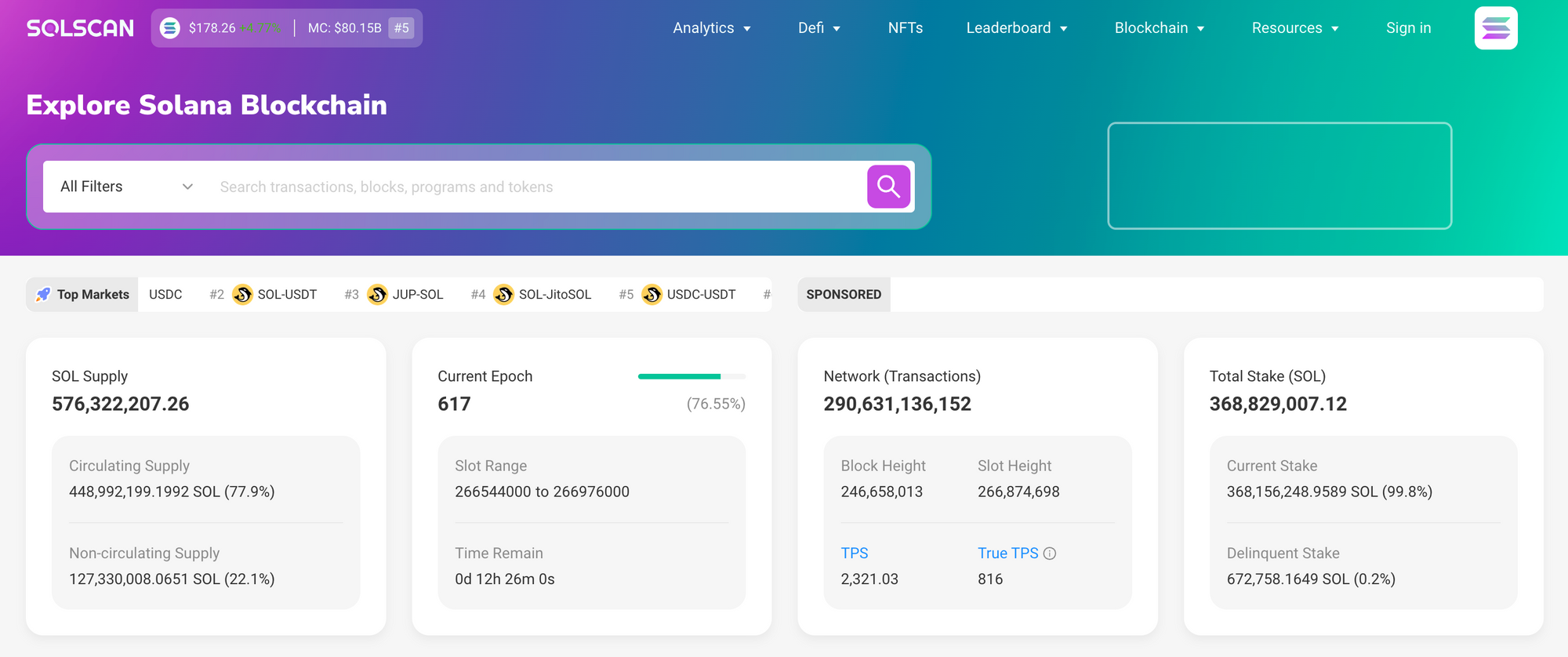
Where to start and the one official link I use
Start with the signature or address field at the top and then pivot to the token mint if relevant. For direct access I often jump straight to the solscan explorer official site and then use filters to narrow by program id, slot range, or instruction type. Medium filtering chops down noise quickly. Longish patterns, like repeated high-value transfers from a single holder across days, usually flag something worth watching.
Hmm… alerts and watchlists are underrated. You can add addresses to a watchlist and monitor large moves or suspicious behavior. Small habits — checking the “recent transactions” panel and glancing at inner instruction counts — build a fast heuristic for trust. When I see repeated internal transfers with matching memos, my gut says “bot or service” and then I look deeper to confirm.
Whoa! Use the holders tab as a quick risk scanner. Medium checks: look for 1-3 wallets holding a disproportionate share. Longer checks: track whether those wallets move tokens to exchanges or multisigs, which often signals intentional distribution or dumping. A couple times this saved me from buying into a token that was effectively owned by a single party.
Seriously? Decode instructions. Solana transactions are built of instructions and inner instructions. Medium-level decoding shows which programs were called and in what order. Longer analysis, where you map those instructions to events across slots, helps reveal exploit chains or front-running attempts that only appear when you stitch events together.
Something felt off about on-chain NFT drops a while back. My instinct said the metadata looked inconsistent, and the holder distribution confirmed weird concentration. I dug into the mint authority and discovered repeated mints by the same signer. Initially I thought it was a minting bug, but then realized it was intentional airdrops to favored wallets. The logs and token history told the story.
Practical tips I use all the time: 1) Copy the transaction signature and paste it into the explorer search. 2) Open the logs and look for “program log:” entries. 3) Examine pre/post balances and inner instructions. 4) Visit the token mint page to inspect supply and top holders. 5) Check the “related transactions” or transfers list to build a small timeline. Medium steps are quick. Deep timelines require patience, though — sometimes you need to stitch 10 transactions to see the real flow.
One advanced move: track program ids and subscriptions. If a program upgrade is suspicious, scan recent transactions for that program id and look for sudden changes in instruction patterns. Longer program-level analysis often uncovers exploit attempts or backward-incompatible changes that break dApps. I’m not 100% sure on every nuance of program upgrades, but pattern recognition usually points me in the right direction.
FAQ
Q: How do I verify a transaction is final?
A: Look at the confirmation status and slot details on the transaction page. Medium evidence comes from “finalized” status and multiple confirmations. If you’re doing high-value moves, wait for finalized status and then cross-check with the slot time and related transfers to ensure no replays or forks affected the outcome.
Q: Can I trust token holder counts and supply on the explorer?
A: These are accurate reflections of on-chain state for the mint addressed, but be careful—some projects use wrapped or derivative tokens that obscure real liquidity. Medium practice: verify the mint authority and check if tokens are locked in contracts or multisigs. Longer verification may require tracing the original asset behind a wrapped token.
Q: What’s the quickest way to spot a rug or a scam?
A: Check holder concentration, recent large transfers to exchanges, and whether the mint authority was immediately renounced. Medium red flags include low liquidity and sudden movement by top holders. Longer pattern detection—repeated dumps timed after marketing spikes—usually reveals malicious intent, though sometimes it’s just poor tokenomics.